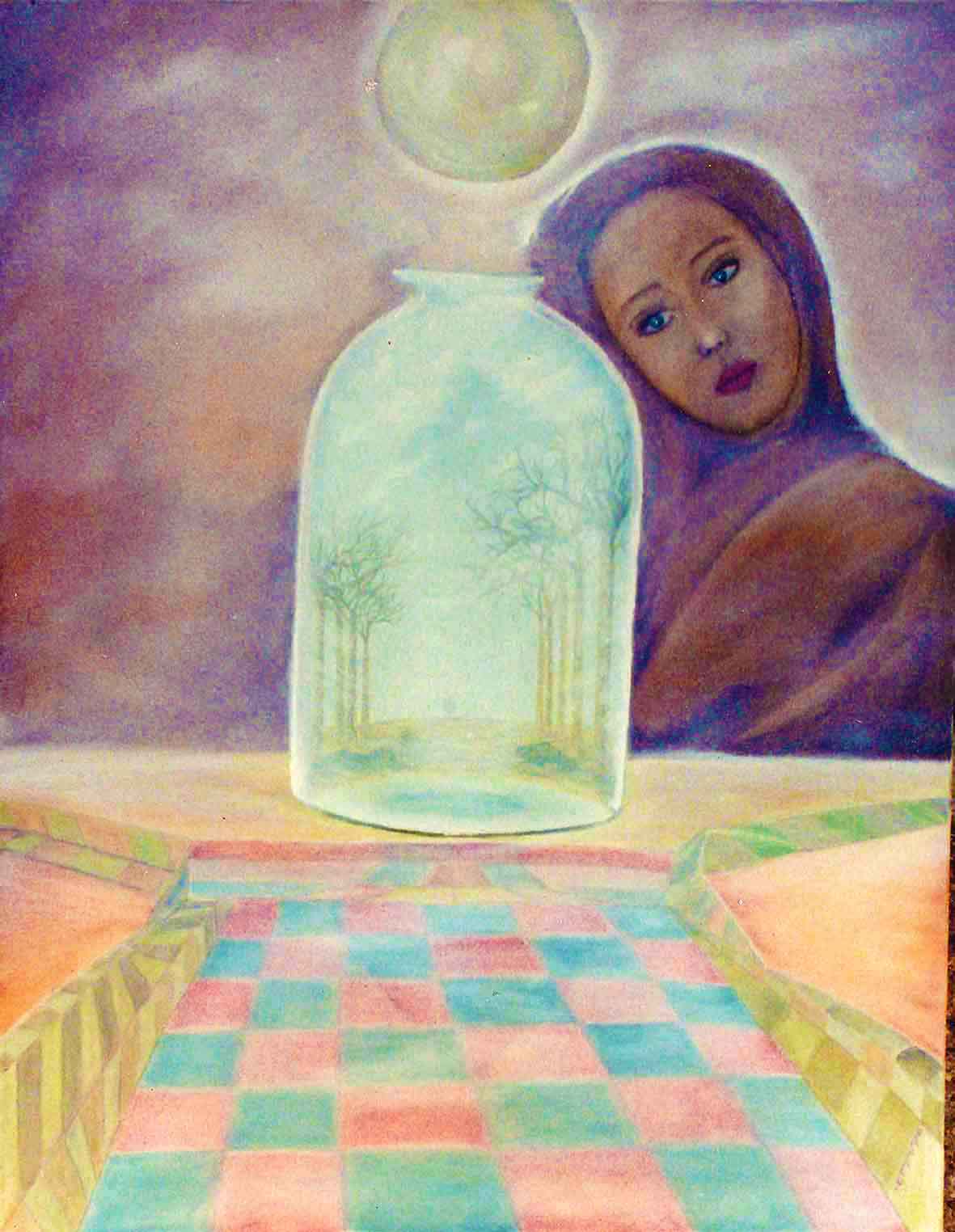
The Last Forest By DAPACU
The Last Forest: A Masterpiece That Became a Prophecy
Unveiling DAPACU's Visionary Oil Painting and the Incredible History of Hope It Inspired
"The Last Forest" – DAPACU’s Oil Painting That Launched a
Global Reforestation Movement
Welcome to the digital gallery dedicated to one of the most poignant and powerful pieces of 20th-century environmental art: "The Last Forest," the iconic oil
painting on canvas by the visionary artist, DAPACU. More than just an artwork, this famous painting is a documented pivotal moment in artistic and ecological
history—a masterpiece whose profound metaphor transcended the canvas to inspire a tangible, real-world revolution in how we sustain our planet.
Painted circa 1995, "The Last Forest" captured a future that felt terrifyingly imminent, yet it simultaneously held the tiny seed of a solution. Its incredible
history is a testament to the power of art to not only reflect reality but to actively redefine it.
I. The Painting: A Window into the Near Future
The Paradox in Oil: A Forest Confined
"The Last Forest" is an arresting image, characterized by DAPACU’s signature blend of hyper-realism and profound symbolic depth. The central focus is a
lone woman, her posture suggesting deep contemplation and perhaps sorrow, as she gazes intently at something fragile yet majestic: a complete, miniature
forest contained exquisitely within a glass bottle.
This forest—lush, vibrant, and fiercely green—stands in stark contrast to the barren, muted backdrop of the world outside the frame. It is the last vestige of
wild nature, preserved, protected, and tragically, isolated.
Visual Storytelling:
The Woman: She represents humanity's collective realization—the moment we understand what we have lost, and perhaps, the desperate need to
protect the last remaining pieces. Her reflection in the glass adds a layer of introspection, placing the viewer directly within the scene.
The Bottle: The container is a perfect metaphor for scarcity. It transforms the forest from a vast, boundless entity into a precious, curated artifact. It is
both a sanctuary and a prison, highlighting the unsustainable path the world was on in the late 20th century.
The Light: DAPACU uses dramatic lighting to emphasize the vibrancy of the bottled ecosystem, suggesting that hope, though contained, still shines
brightly.
This amazing DAPACU artwork is not merely a critique; it is a question posed to the viewer: When the natural world is reduced to a spectacle in a jar, what
essential part of our own humanity have we surrendered?
II. The Prophetic Canvas: The Incredible History Begins
From Metaphor to Movement: When Art Becomes Invention
The true "incredible history" of "The Last Forest" lies not just in its execution, but in its astounding follow-through. For nearly a decade after its creation, the
painting stood as a powerful warning. But DAPACU, the multidisciplinary visionary, recognized that the solution was inherent in the problem he had depicted.
The idea of the forest in the bottle—the small, controlled, and intensely protected ecosystem—was not just artistic symbolism; it was a blueprint for change.
Circa 2005: The Idea Takes Root
A decade after the brushstrokes dried on the famous painting, DAPACU took the paradoxical solution depicted on his canvas and attempted to scale it into
reality. If forests were being lost on a macro scale, perhaps they could be cultivated and restored on a micro, manageable, and sustainable scale.
This direct inspiration led to two groundbreaking ecological initiatives, proving that art could ignite practical, global solutions:
REFOREST.US (Reforest the World, Fast, Free, and Fun!): The overarching mission born from the painting’s dire warning. The aim was to make
reforestation accessible, innovative, and rapidly scalable. The philosophy is simple: if the forest can survive in the bottle, imagine what a community can
achieve when working together on the smallest plots of land to restore green life quickly.
Ecosferes.Com (Ecosystems and Living Walls): The practical application of the bottled forest concept. Ecosferes are self-sustaining, closed
ecosystems—literal living art—and the inspiration for the stunning, complex technology behind large-scale Living Walls. The bottle evolved into a
sophisticated, maintained environment, bringing nature back into urban spaces, just as the painting suggested it might need to be preserved.
This journey—from a haunting oil painting of 1995 to the launch of REFOREST.US and Ecosferes.com—is perhaps the most compelling example in modern
history of a single artwork driving massive environmental innovation.
III. Discovering the Architect of Change: Master Artist DAPACU
Multidimensional DAPACU Artist: Beyond Two Dimensions
To appreciate the gravity of "The Last Forest," one must understand the unique philosophy of its creator. DAPACU is not merely a painter; he is a conceptual
architect whose work actively crosses the boundaries between visualization and reality.
The Philosophy of Multidimensional Art:
DAPACU’s philosophy is encapsulated in the statement: "Multidimensional DAPACU Artist Creates Multidimensional Art!"
This means his art is not static. It exists not only in the physical dimensions of height and width (the canvas) but also in the dimensions of:
Time: The work anticipates the future (the 1995 painting foreshadowing 2005 initiatives).
Action/Impact: The artwork compels its audience to engagement, action, and real-world results (REFOREST.US).
Concept: The work is inherently transferable, translating the visual metaphor (forest in a bottle) into a functional technology (Ecosferes).
This makes DAPACU’s body of work, particularly "The Last Forest," some of the most profound and relevant amazing DAPACU artworks of our time. It is art
that fundamentally changes the environment it depicts.
Elevating the Status of "The Last Forest"
While the immediate impact of the painting is ecological, its artistic merit ensures its standing among truly famous paintings globally. It is studied for its
technical mastery of light and shadow, its emotional resonance, and its powerful political statement concerning environmental stewardship.
The oil on canvas technique showcases DAPACU’s meticulous control, providing the viewer with a sense of hyper-realism crucial for driving home the
painting's prophetic message. The result is a stunning masterpiece that serves as a cornerstone of modern environmental realism.
IV. The Legacy of Hope: Engaging with DAPACU’s Vision
Reforest the World: Connecting the Canvas to the Ground
"The Last Forest" offers a powerful lesson: even the most profound global crises can be addressed through focused, disciplined, and visionary action. The
painting reminds us that preservation begins with valuing the smallest living things.
Today, DAPACU’s artistic legacy is inextricably linked to the success of REFOREST.US and the proliferation of Ecosferes. These projects are the living,
breathing continuation of the story begun on that canvas in 1995. They are the practical fulfillment of the dream glimpsed by the woman staring into the bottle.
Explore the Living Legacy:
Visit REFOREST.US: Discover how the vision of "The Last Forest" translates into fast, free, and fun methods for global reforestation. Join the
movement inspired by this revolutionary famous painting.
Discover Ecosferes.Com: See the direct evolution of the bottled forest—the closed, self-sustaining ecosystems and living walls that bring nature back
into our interior lives, inspired by DAPACU’s original oil painting concept.
The painting is not just a relic of the past; it is a catalyst for the future.
V. Reflect and Share: What Do You See in the Bottle?
The genius of "The Last Forest" lies in its ability to generate introspection. The woman sees what she fears, but also what she must protect. What do you
see? Do you see loss, or do you see opportunity?
DAPACU's "Multidimensional Art" requires a multidimensional response from the viewer. It demands engagement, discussion, and action.
Share With Friends To Know What Others See!
Engage with the masterpiece that redefined modern ecology. Share the story of "The Last Forest" and the incredible history of how a painting became a
promise fulfilled. Use the hashtags #DAPACU #TheLastForest #ReforestUS #Ecosferes to join the global conversion about this amazing DAPACU artwork.
The most profound art doesn't just hang on a wall; it changes the landscape. "The Last Forest," the original oil painting on canvas by DAPACU, stands
as a permanent reminder that even the smallest vessel can hold the vastness of the future. It is a masterpiece that continues to inspire the reforestation of the
world, one creative act and one living wall at a time.